Click to play embedded YouTube video.
10 reasons

Re: 10 reasons
I liked #4--the exploding quill. The lightning strike near the end was good also.
To find the Truth, you must go Beyond.
-
geckzilla

- Ocular Digitator
- Posts: 9180
- Joined: Wed Sep 12, 2007 12:42 pm
- Location: Modesto, CA
- Contact:
Re: 10 reasons
Apparently I need to go back and take a proper AP English class. One which correctly attributes Shakespeare's plays to the Earl of Oxford?
Just call me "geck" because "zilla" is like a last name.

Re: 10 reasons
Wow, some really stupid reasons there, but I guess that's what this guy needs to sell his movie, hmmm?
(I suspect Art can name at least one composer who retired from composing and never wrote another note of music; what fails here is the director's imagination, as he cannot conceive that others may be different from him!)
(I suspect Art can name at least one composer who retired from composing and never wrote another note of music; what fails here is the director's imagination, as he cannot conceive that others may be different from him!)
A closed mouth gathers no foot.
-
neufer

- Vacationer at Tralfamadore
- Posts: 18805
- Joined: Mon Jan 21, 2008 1:57 pm
- Location: Alexandria, Virginia
Re: 10 reasons
So far as I am concerned the fact that the author of Rosalind, Portia, Helen & Beatrice lived the last six years of his life in the boondocks with an illiterate wife & two illiterate daughters is more than enough reason in and of itself.owlice wrote:
Wow, some really stupid reasons there,
(Can you provide us with ten different reasons to believe in General Relativity?)
Thank god that Sony feels a need to sell his movie. The screenwriter, Orloff, had a much more realistic plot originally but Emmerich thought that it was too much like _Amadeus_ so he latched onto the rather silly incest/royal heir motive for keeping things secret. If the movie does sell Oxfordians can probably live with this Faustian bargain.owlice wrote:
I guess that's what this guy needs to sell his movie, hmmm?
I cannot think of a single other good and prolific writer who retired cold turkey from writingowlice wrote:
(I suspect Art can name at least one composer who retired from composing and never wrote another note of music;
(; especially one who then went on to live with his illiterate family and spent all his spare time suing his neighbors for shillings & pence).
Can you name one?
What fails here is owlice's imagination, as she cannot conceive that she has been a sucker for ever having believed in the Stratfordian myth!owlice wrote:
what fails here is the director's imagination, as he cannot conceive that others may be different from him!)
(I'll bet that owlice had a tough time learning the truth about Santa Claus as well.)
---------------------------------------------------
Charlie Chaplin on Shakespeare:
.
- <<In the work of the greatest geniuses, humble beginnings
will reveal themselves somewhere but one cannot trace
the slightest sign of them in Shakespeare...
Whoever wrote [Shakespeare] had an aristocratic attitude.>>
Walt Whitman on Shakespeare:
.
- <<Conceiv'd out of the fullest heat & pulse of European feudalism,
personifying in unparallel'd ways the medieval aristocracy,
its towering spirit of ruthless and gigantic caste, its own
peculiar air and arrogance (no mere imitation) one of the
wolfish earls so plenteous in the plays themselves, or some
born descendent and knower, might seem to be the true author
of those amazing works... I am firm against Shaksper.>>
Henry James on Shakespeare:
.
- <<I am… haunted by the conviction that
the divine William is the biggest and most successful fraud
ever practiced on a patient world.>>
Art Neuendorffer
-
neufer
- Vacationer at Tralfamadore
- Posts: 18805
- Joined: Mon Jan 21, 2008 1:57 pm
- Location: Alexandria, Virginia
Re: 10 reasons
Not in the least.owlice wrote:
I seem to have hit a nerve.
I would love to discuss which you consider to be Emmerich's "really stupid reasons."
Art Neuendorffer
Re: 10 reasons
Oh, Art, I'm sure you can manage to have a good argument -- which is what you seem to be after -- without me! Google "writers who stopped writing." It does happen, just as some composers stop composing, some astrophysicists switch fields, some teachers become programmers, some doctors become musicians.
Google "elizabethan england literacy rates female" while you're a-Googling, too; literacy rates for females were far lower than for men. Disparate educations and accomplishments between two spouses happens even today, as I'm sure you know.
Must go feed my meter; have fun!
Google "elizabethan england literacy rates female" while you're a-Googling, too; literacy rates for females were far lower than for men. Disparate educations and accomplishments between two spouses happens even today, as I'm sure you know.
Must go feed my meter; have fun!
A closed mouth gathers no foot.
-
neufer
- Vacationer at Tralfamadore
- Posts: 18805
- Joined: Mon Jan 21, 2008 1:57 pm
- Location: Alexandria, Virginia
Re: 10 reasons
Ah, but can you manage to have a good argumentowlice wrote:
Oh, Art, I'm sure you can manage to have a good argument -- which is what you seem to be after -- without me!
-- which is what you seem to be avoiding.
I cannot think of a single other good and prolific writer who retired cold turkey from writing(; especially one who then went on to live with his illiterate family and spent all his spare time suing his neighbors for shillings & pence).owlice wrote:
Google "writers who stopped writing." It does happen, just as some composers stop composing, some astrophysicists switch fields, some teachers become programmers, some doctors become musicians.
Can you name one?
..............................................................................
Hint, neither J.D. Salinger nor Harper Lee can be considered prolific writers.
Also:
- 1) J.D. Salinger was more lucky than good in striking a nerve with James Dean rebel young folks.
2) Harper Lee (like William Shakspear) was probably a much more acceptable
front person for the actual homosexual author (Truman Capote & Edward de Vere respectively).
That would be a fine argument...if the man from Stratford was just a simple butcher.owlice wrote:
Google "elizabethan england literacy rates female" while you're a-Googling, too; literacy rates for females were far lower than for men. Disparate educations and accomplishments between two spouses happens even today, as I'm sure you know.
However, Shakespeare may have been the greatest writer of all time
and he was clearly fascinated by brilliant articulate women.
Is it by any chance an iambic penta-meterowlice wrote:
Must go feed my meter; have fun!

Art Neuendorffer

Re: 10 reasons
I prefer anapests!Art wrote:
Is it by any chance an iambic penta-meter
A-na-PEST- er till HÄST ryc-ker FRAM!!
Well, um, anapests are charging on horseback. Or something.

Ann
Color Commentator
Re: 10 reasons
Two of those arguments were crappy, though. Why would Shakespeare have mentioned his plays or his sonnets in his will? They weren't his, not back then, not just because he had written them. (Or maybe I should have said that they wouldn't have been his even if he had indeed written them.)
There was no such thing as copyright back in the early seventeenth century!
And hey, Shakespeare knew too much about other countries for a person who had never travelled abroad? Yeah, well, Shakespeare's most famous play is arguably Hamlet, and Hamlet was the Prince of Denmark. From Elsinore. Well, let me tell you, whoever wrote Hamlet had never been to Elsinore! The cliffs of Elsinore... hah, they would be like the cliffs of Kansas, let me tell you!
Really bad arguments!!
Ann
There was no such thing as copyright back in the early seventeenth century!
And hey, Shakespeare knew too much about other countries for a person who had never travelled abroad? Yeah, well, Shakespeare's most famous play is arguably Hamlet, and Hamlet was the Prince of Denmark. From Elsinore. Well, let me tell you, whoever wrote Hamlet had never been to Elsinore! The cliffs of Elsinore... hah, they would be like the cliffs of Kansas, let me tell you!
Really bad arguments!!
Ann
Last edited by Ann on Wed Oct 19, 2011 5:09 pm, edited 3 times in total.
Color Commentator
Re: 10 reasons
I don't want an argument at all, good or otherwise.neufer wrote:Ah, but can you manage to have a good argument -- which is what you seem to be avoiding.
Don't need to. See above.neufer wrote:Can you name one?
No, just parking.neufer wrote:Is it by any chance an iambic penta-meter
A closed mouth gathers no foot.
-
neufer
- Vacationer at Tralfamadore
- Posts: 18805
- Joined: Mon Jan 21, 2008 1:57 pm
- Location: Alexandria, Virginia
Re: 10 reasons
Ann-a-pest wrote:
Two of those arguments were crappy, though. Why would Shakespeare have mentioned his plays or his sonnets in his will? They weren't his, not back then, not just because he had written them. (Or maybe I should have said that they wouldn't have been his even if he had indeed written them.)
There was no such thing as copyright back in the early seventeenth century!
Sure there was:
http://en.wikipedia.org/wiki/Stationers%27_Register wrote:
<<The Stationers' Register was a record book maintained by the Stationers' Company of London. The Register allowed publishers to document their right to produce a particular printed work, and constituted an early form of copyright law. The Company's charter gave it the right to seize illicit editions and bar the publication of unlicensed books. By paying a fee of 4 to 6 pence, a bookseller could register his right to publish a given work. One example: the Stationers' Register reveals that on 26 November 1607, the stationers John Busby and Nathaniel Butter claimed the right to print "A booke called Master William Shakespeare his historye of Kinge Lear, as yt was played before the Kinges maiestie at Whitehall vppon Sainct Stephens night at Christmas Last, by his maiesties servantes playinge vsually at the Globe on the Banksyde." (They paid sixpence.)>>http://en.wikipedia.org/wiki/Nathaniel_Butter wrote:
<<King Lear was entered into the Stationers' Register on 26 November 1607, by Butter and colleague John Busby. The first quarto edition of the play was published the following year, printed by Nicholas Okes, with Butter listed as publisher. Busby appears to have dropped out of the enterprise prior to publication. The case of King Lear Q1 grew complicated in 1619, when William Jaggard reprinted the play, apparently without Butter's permission, in his cryptic false folio affair. This problematic second quarto was issued with the false date of 1608 and the false inscription "Printed for Nathaniel Butter.">>

_______ Hamlet, Prince of Denmark Act 1, Scene 4Ann-a-pest wrote:
And hey, Shakespeare knew too much about other countries for a person who had never travelled abroad? Yeah, well, Shakespeare's most famous play is arguably Hamlet, and Hamlet was the Prince of Denmark. From Elsinore. Well, let me tell you, whoever wrote Hamlet had never been to Elsinore! The cliffs of Elsinore... hah, they would be like the cliffs of Kansas, let me tell you!
HORATIO: What if [the ghost] tempt you toward the flood, my lord,
. Or to the dreadful summit of the cliff
. That beetles o'er his base into the sea,
. And there assume some other horrible form,
. Which might deprive your sovereignty of reason
. And draw you into madness?
Art Neuendorffer
Re: 10 reasons
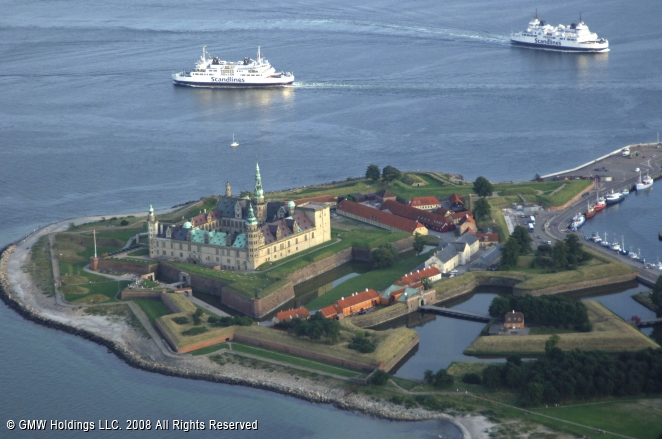
Was Elsinore's moat once connected to the sea?

Helsingborg in the foreground, Helsingør in the background, Øresund in the middle.
Connected to the sea, by the way. What sea? The Strait of Öresund (or Øresund, as the Danes would spell it)?
Ann-a-pest
Color Commentator
10 reasons why Einstein didn't make his own breakthroughs
You didn't know it, but here's a shcoking truth for you. Einstein didn't make his own scientific breakthroughs! Here are the reasons:
1: Einsten's career didn't really take off until he met Mileva Marić at the Polytechnic in Zurich. http://en.wikipedia.org/wiki/Albert_Einstein writes:
3: Well-known Russian physicist Abram Joffe attributed three of Einstein's groundbreaking papers of 1905 to Einstein-Marity. Marity was Marić's official name.
4: It is obvious that Einstein didn't fully understand his own work on the photoelectric effect from 1905. http://en.wikipedia.org/wiki/Albert_Einstein says about the photoelectric effect:
6: After Einstein had divorced Mileva, he didn't do much in the way of physics apart from describing the Bose–Einstein condensation, which was probably mostly the work of Satyendra Nath Bose anyway.
7: Mileva, who knew everything about the relativity of appreciation bestowed on male and female physicists, was clearly the one who made Einstein understand that relativity governs everything.
8: Mileva was made pregnant by Einstein before he had married her, which surely made her realize that things (such as her own waist) can suddenly start expanding. Clearly this helped her understand the expanding universe.
9: Why did Einstein choose Lambda, Λ, as the symbol of the cosmological constant? Obviously because Mileva had been the constant in his scientific life, because the shape of the Greek letter itself is suggestive of an exclusively female part of the human anatomy, and because Lambda is the eleventh letter in the Greek alphabet. Mileva Marić's name consisted of eleven letters.
10: Why did Einstein say that the cosmological constant Lambda was the biggest mistake of his life? It was because by then he had divorced Mileva, who was the personification of Lambda to him, and he was now officially rejecting her.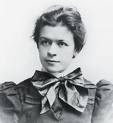 There you are! The works of Einstein were made by... his wife Mileva!!!
Professor Ann-a-pest
1: Einsten's career didn't really take off until he met Mileva Marić at the Polytechnic in Zurich. http://en.wikipedia.org/wiki/Albert_Einstein writes:
2: Einstein did his best work in the first few years of the 20th century, when he was heavily involved with Mileva and had recently married her.Over the next few years, Einstein and Marić's friendship developed into romance, and they read books together on extra-curricular physics in which Einstein was taking an increasing interest.
3: Well-known Russian physicist Abram Joffe attributed three of Einstein's groundbreaking papers of 1905 to Einstein-Marity. Marity was Marić's official name.
4: It is obvious that Einstein didn't fully understand his own work on the photoelectric effect from 1905. http://en.wikipedia.org/wiki/Albert_Einstein says about the photoelectric effect:
5: The fact that Einstein didn't understand his own work on the photoelectric effect can be seen from the fact that he spent his later years (when he had divorced Mileva) squabbling with Niels Bohr and denying quantum theory.Resolved an unsolved puzzle by suggesting energy existed in discrete quanta rather than continuous levels. The theory of quanta was either pivotal to, or gave rise to, quantum theory.
6: After Einstein had divorced Mileva, he didn't do much in the way of physics apart from describing the Bose–Einstein condensation, which was probably mostly the work of Satyendra Nath Bose anyway.
7: Mileva, who knew everything about the relativity of appreciation bestowed on male and female physicists, was clearly the one who made Einstein understand that relativity governs everything.
8: Mileva was made pregnant by Einstein before he had married her, which surely made her realize that things (such as her own waist) can suddenly start expanding. Clearly this helped her understand the expanding universe.
9: Why did Einstein choose Lambda, Λ, as the symbol of the cosmological constant? Obviously because Mileva had been the constant in his scientific life, because the shape of the Greek letter itself is suggestive of an exclusively female part of the human anatomy, and because Lambda is the eleventh letter in the Greek alphabet. Mileva Marić's name consisted of eleven letters.
10: Why did Einstein say that the cosmological constant Lambda was the biggest mistake of his life? It was because by then he had divorced Mileva, who was the personification of Lambda to him, and he was now officially rejecting her.
Professor Ann-a-pest
Last edited by Ann on Thu Oct 20, 2011 7:39 am, edited 3 times in total.
Color Commentator
-
neufer
- Vacationer at Tralfamadore
- Posts: 18805
- Joined: Mon Jan 21, 2008 1:57 pm
- Location: Alexandria, Virginia
Re: 10 reasons
Yes....Øresund.
I'm guessing that the moat is, in fact, currently AT SEALEVEL for:1) there is no other source of water around and
2) how else could they be assured that moat would never dry out.
Ann wrote:Unlikely, says Professor Ann-a-pest. After the ice melted following the latest ice age, Scandinavia has been slowly "tipping over", adding centimeters above sea level every year to its northern parts but slowly sinking in the south. If the moat of Elsinore is not connected to the sea now, when the altitude of Elsinore is lower than ever, it was not connected to the sea in the days of Shakespeare (or in the days of the original Hamlet myth).Was Elsinore's moat once connected to the sea?
Connected to the sea, by the way. What sea? The Strait of Öresund (or Øresund, as the Danes would spell it)?
Art Neuendorffer
Re: 10 reasons
Hmm... Ann - science officer, color commentator, professor, and perhaps cook - who makes a mean batch of Ann-a-pesto
To find the Truth, you must go Beyond.
-
neufer
- Vacationer at Tralfamadore
- Posts: 18805
- Joined: Mon Jan 21, 2008 1:57 pm
- Location: Alexandria, Virginia
Re: 10 reasons why Einstein didn't make his own breakthrough
There is probably some truth to that.Ann wrote:
The works of Einstein were made by... his wife Mileva!!!
Art Neuendorffer
Re: 10 reasons
Yes!!!Beyond wrote:Hmm... Ann - science officer, color commentator, professor, and perhaps cook - who makes a mean batch of Ann-a-pesto

Ann-a-pesto
Color Commentator
-
starstruck

- Science Officer
- Posts: 177
- Joined: Sat Sep 17, 2011 9:37 am
Re: 10 reasons
One possible way they ensured this was by digging 'Öresund Wells' . . .neufer wrote:how else could they be assured that moat would never dry out.
http://ia600300.us.archive.org/16/items ... Part_1.MP3
Re: 10 reasons
Interesting, starstruck. I tried to follow your link, but I couldn't open it here at work. Hopefully it will work better at home!starstruck wrote:One possible way they ensured this was by digging 'Öresund Wells' . . .neufer wrote:how else could they be assured that moat would never dry out.
http://ia600300.us.archive.org/16/items ... Part_1.MP3

Ann
Color Commentator
-
neufer
- Vacationer at Tralfamadore
- Posts: 18805
- Joined: Mon Jan 21, 2008 1:57 pm
- Location: Alexandria, Virginia
Re: 10 reasons
I can dig himstarstruck wrote:One possible way they ensured this was by digging 'Öresund Wells' . . .neufer wrote:
how else could they be assured that moat would never dry out.
http://ia600300.us.archive.org/16/items ... Part_1.MP3
 :
:-----------------------------------------
Orson (Öresund) Welles on Shakespeare (London : Allen Wingate Ltd., 1953):
.
- <<I think Oxford wrote Shakespeare.
If you don’t agree, there are some awfully funny coincidences to explain away.>>
Art Neuendorffer
Re: 10 reasons
I just visited 'Oresund Wells'. I found myself drowning in ye merry olde anglish, so i thence departed.
To find the Truth, you must go Beyond.
Re: 10 reasons
I'm a bit too impatient to listen to all of it, although I definitely liked it for about seven minutes. Öresund Wells = Orson Welles: that was really funny! But after about seven minutes it was time for the six o'clock news on TV, and I deserted poor Hamlet's dead father and king for another dead father and sort of king, Moammar Ghadaffi (or however you spell his name).Beyond wrote:I just visited 'Oresund Wells'. I found myself drowning in ye merry olde anglish, so i thence departed.
I'll tell you a secret: I have written a super-short version of Hamlet for my students. I don't have it here, so I can't quote any of it to you, but I'm pretty satisfied with it. The kids get the story. In case you wonder how I did it, I started out with an abbreviated version of Hamlet, and then I whittled it down to its bare bones. Rosencrantz and Guildenstern, for example, are nowhere to be seen in my version. And those who talk for for five minutes without catching their breaths in the real version get about five seconds in mine. Maybe ten.
But, Starstruck, thank you for posting that Orson Welles link!


But I swear you could see first his
cockiness, then his momentary confusion, then his doubt, then his increasing and soon fullfledged horror and panic as Orson Welles proved to us that Macbeth saw the forest coming for him in order to kill him. That was a piece of the most brilliant, amazing acting.
Ann
Color Commentator
Why Will wrote Shakespeare - sort of
Art, this is for you. And for you too, owlice.
Art, you recently posted a video where director Roland Emmerich listed ten reasons why Shakespeare is a fraud, and why he didn't write the works attributed to him. The reasons were:
 1: Not a single manuscript, poem or letter was ever found in William Shakespeare's own hand.

 3: Even though Shakespeare himself was not from the upper classes, he focused exclusively on the aristocracy in his tragedies.
 4: The only handwriting that exists in Shakespeare's own hand is six shaky signatures.
 5: Shakespeare never wrote anything about the death of his son.
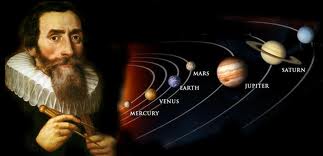 6: Shakespeare had relatively little scholing, but he seemed to have a great knowledge about astronomy, medicine, art, music, military, law and philospy. He also seemed to know a lot about the life of the aristocracy.
 7: Shakespeare returned to Stratford in his late forties and never wrote anything again.
 8: Shakespeare never left England, but a third of his plays are set in Italy.

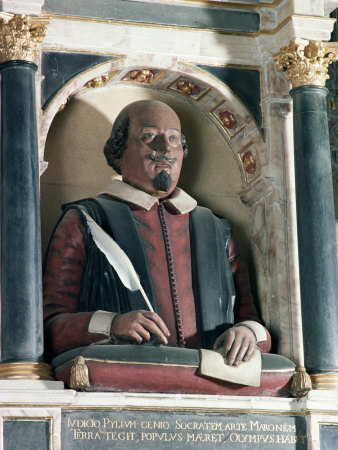
 9:The famous Shakespeare bust in the Holy Trinity Church in Stratford shows Shakespeare holding a quill and parchment. But the original version of that bust showed him holding a grain of sack!
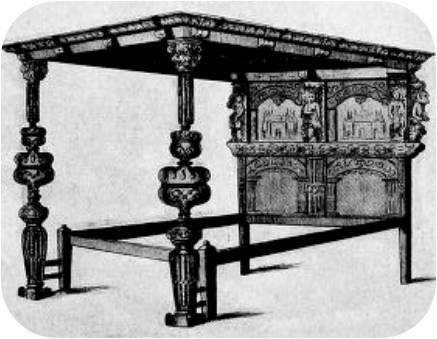
10: In Will's will, he didn't mention his plays and sonnets at all, although he famously bequeathed his second best bed to his wife!
It all sounds suspcious, doesn't it? Mustn't Shakespeare have been a fraud? Surely he can't have written those fantastic plays (and sonnets)?
Yes he can, I think - sort of. The operative words here are "Stratford", "London", "family", "knowledge" and "write".
There is one more operative word, a very very Shakespearean word. Or three of them. The word is "word". I googled "Words, words, words" and got this video. This guy may be considered a very, very, very, very, VERY little brother of Shakespeare. Words, words, words.
Stay tuned for more -I'll be back!
Ann
Art, you recently posted a video where director Roland Emmerich listed ten reasons why Shakespeare is a fraud, and why he didn't write the works attributed to him. The reasons were:
2: His daughters couldn't read.
10: In Will's will, he didn't mention his plays and sonnets at all, although he famously bequeathed his second best bed to his wife!
It all sounds suspcious, doesn't it? Mustn't Shakespeare have been a fraud? Surely he can't have written those fantastic plays (and sonnets)?
Yes he can, I think - sort of. The operative words here are "Stratford", "London", "family", "knowledge" and "write".
There is one more operative word, a very very Shakespearean word. Or three of them. The word is "word". I googled "Words, words, words" and got this video. This guy may be considered a very, very, very, very, VERY little brother of Shakespeare. Words, words, words.
Click to play embedded YouTube video.
Ann
Color Commentator