
Sunset through a Thermal Inversion
http://www.danilopivato.com
Copyright: Danilo Pivato
[attachment=3]stintino_2012.jpg[/attachment]
NGC 6946: Fireworks Galaxy in Cepheus and Cygnus
http://www.astronomersdoitinthedark.com ... =113&p=455
Copyright: Scott Rosen
NOAA 1530
http://simotron.wordpress.com/2012/07/2 ... orbiter-2/
Copyright: Alessandro Bianconi
[attachment=2]Close up NOOA1530 color.jpg[/attachment]
Another Nova in Sagittarius! Designation # PNV J18202726-2744263
http://www.galacticimages.com
Copyright: John Chumack
[attachment=1]NovaSag4_072812_Chumack_Mag9_illustLR.jpg[/attachment]
Barnard 72: The Snake Nebula
Copyright: Louie Atalasidis
[attachment=0]The-Snake_Louie.jpg[/attachment]
Abell 2151: Hercules Galaxy Cluster
http://www.cxielo.ch/gallery/f/abell2151
Copyright: Martin Rusterholz
Recent Submissions: 2012 August
Re: Recent Submissions: 2012 August


- Attachments
-
- Click to view larger image
-
- Click to view larger image
-
- Click to view larger image
-
- Click to view larger image
A closed mouth gathers no foot.
-
Emil Ivanov
- Science Officer
- Posts: 122
- Joined: Fri Jan 07, 2011 1:49 pm
- Location: Vienna, Austria
- Contact:
Re: Recent Submissions: 2012 August


Last edited by Emil Ivanov on Mon Aug 06, 2012 12:33 pm, edited 1 time in total.
-
ignacio_db
- Ensign
- Posts: 44
- Joined: Tue Sep 27, 2011 9:53 pm
Re: Recent Submissions: 2012 August
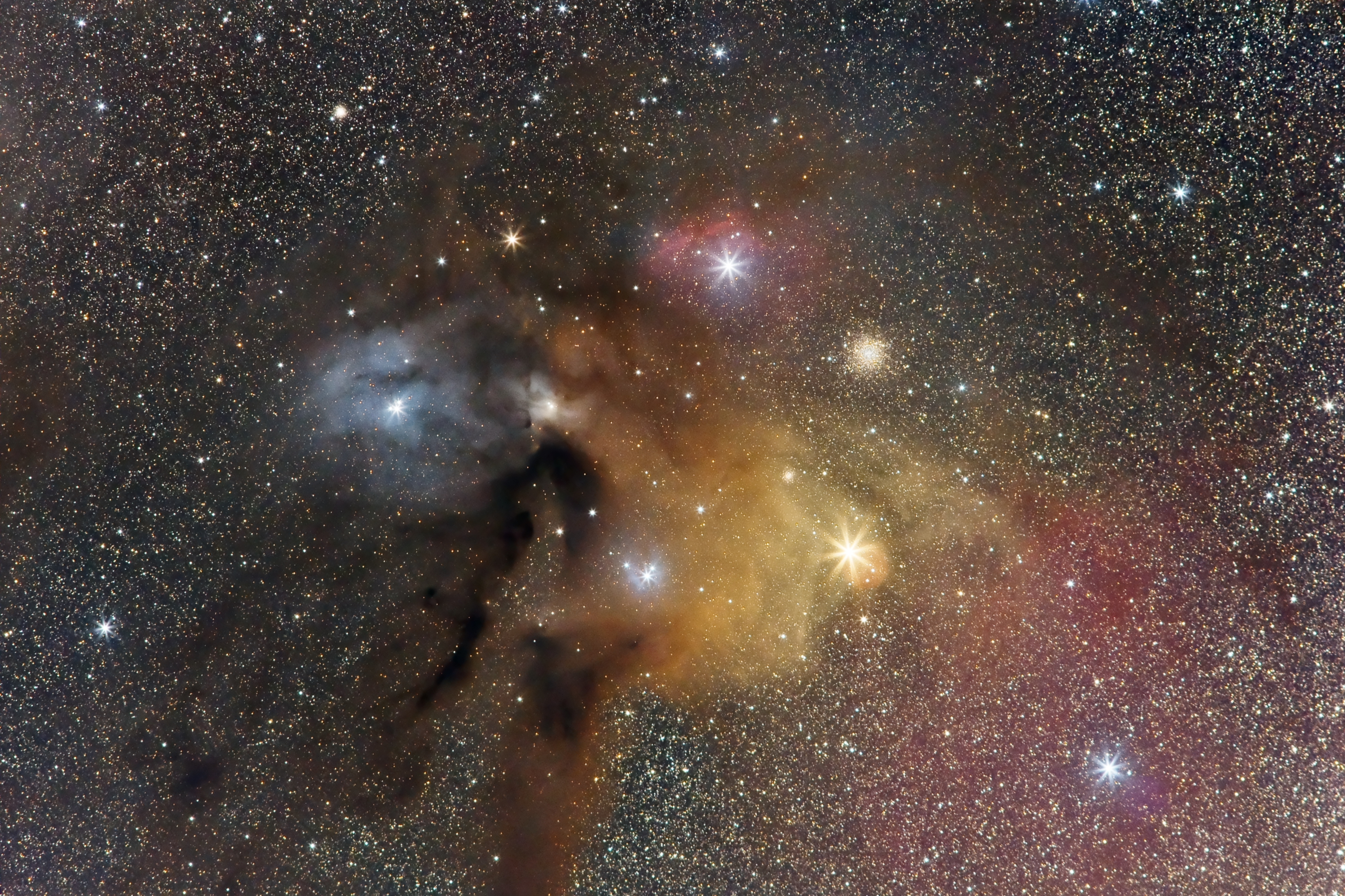
Antares Neighborhood
http://www.pampaskies.com
Copyright: Ignacio Diaz Bobillo
hires: http://www.pampaskies.com/gallery3/var/ ... -hires.JPG
Thanks for looking!
http://www.pampaskies.com
Copyright: Ignacio Diaz Bobillo
hires: http://www.pampaskies.com/gallery3/var/ ... -hires.JPG
Thanks for looking!
- Attachments
-
Martian Triangle
http://science.nasa.gov/science-news/sc ... rslanding/
Mi amigo Rafael ha preparado tres plataformas en su finca para que aniden en ellas cigüeñas (dos sobre postes de aluminio y una sobre el depósito del agua). Espero repetir el año que viene la fotografía con los tres nidos ocupados, y saber mucho más de Marte. /Google translate/ My friend Rafael has prepared three platforms on his farm for storks nesting in them (two on aluminum poles and on the water tank). I hope to repeat next year the picture with the three occupied nests, and know much more of Mars.
- Mérida, Spain. 2012-08-05
Re: Recent Submissions: 2012 August
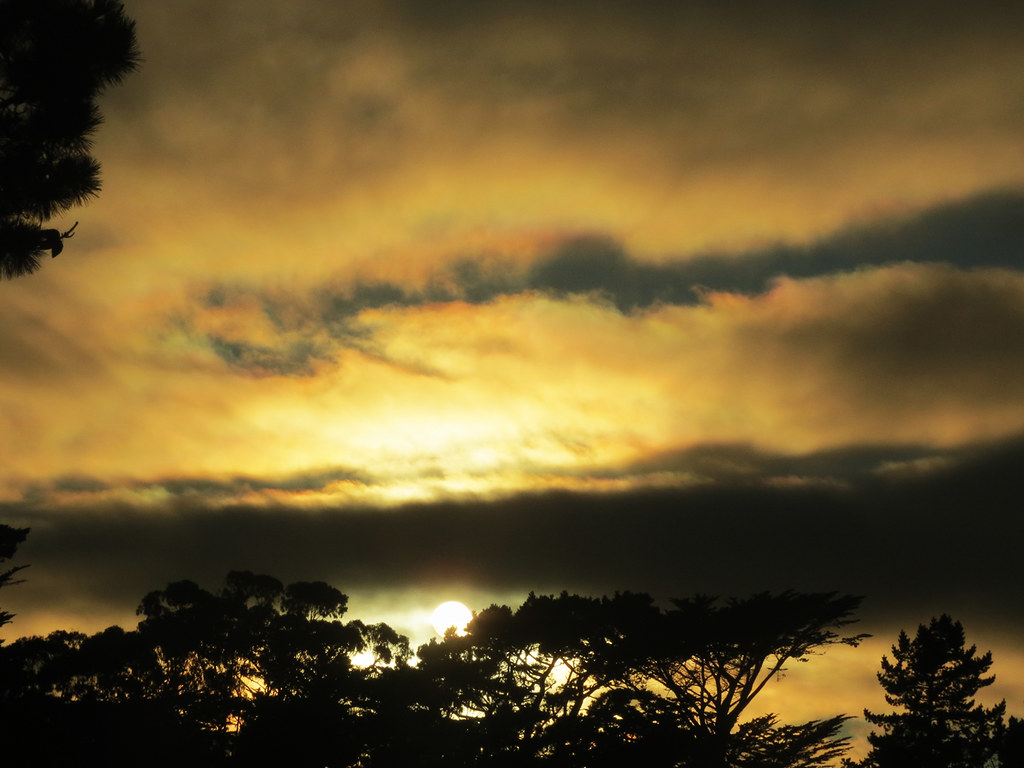
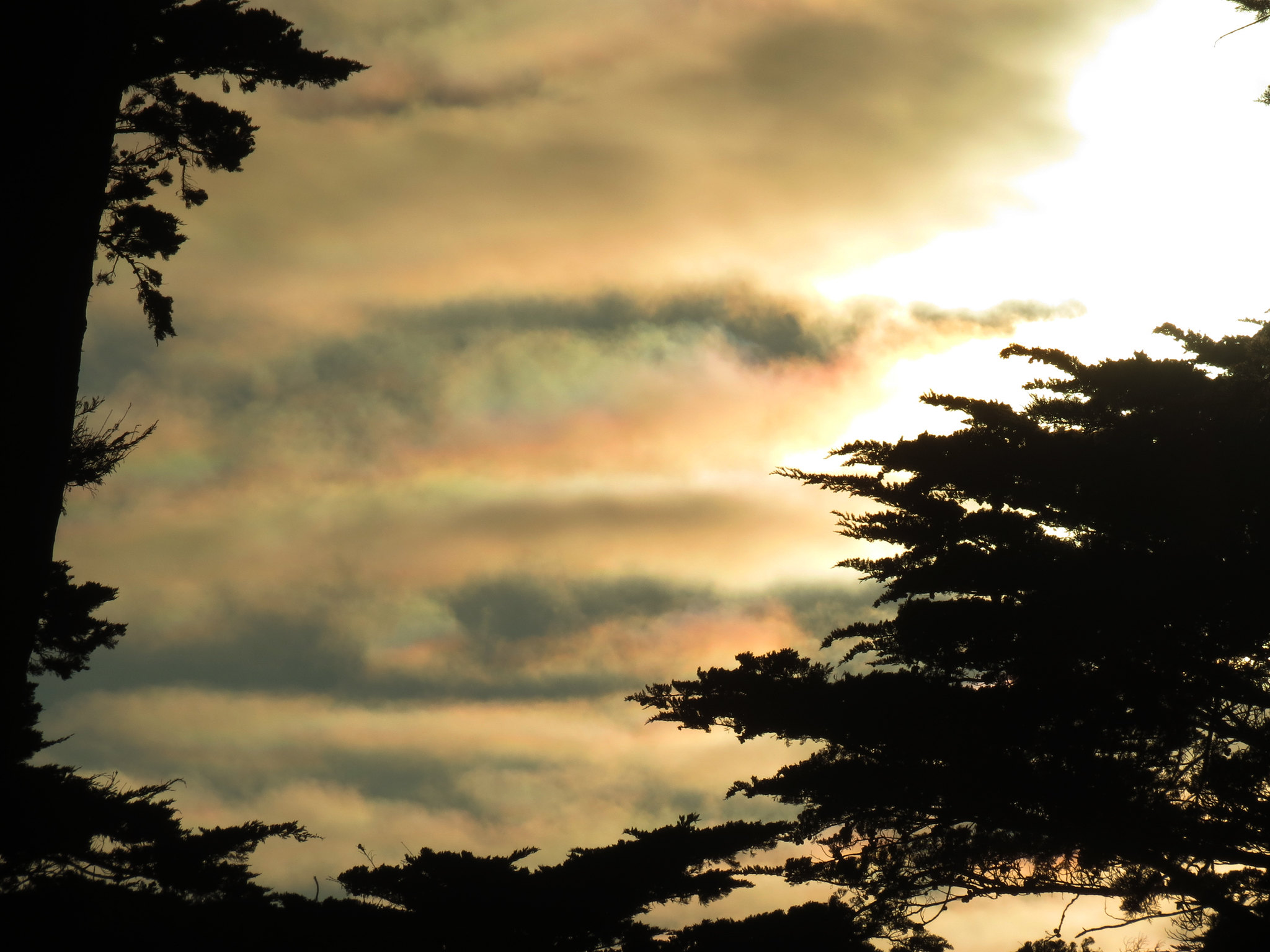
Iridescent clouds
Copyright:Mila Zinkova
http://farm9.staticflickr.com/8283/7723 ... cff0_k.jpg
Iridescent clouds
Copyright:Mila Zinkova Sunspots
Copyright:Mila Zinkova
http://spaceweather.com/submissions/pic ... 229451.jpg
Copyright:Mila Zinkova
http://farm9.staticflickr.com/8283/7723 ... cff0_k.jpg
Iridescent clouds
Copyright:Mila Zinkova Sunspots
Copyright:Mila Zinkova
http://spaceweather.com/submissions/pic ... 229451.jpg
Last edited by bystander on Mon Aug 06, 2012 4:44 pm, edited 1 time in total.
Reason: please, no hot links to images > 400kb
Reason: please, no hot links to images > 400kb
Re: Recent Submissions: 2012 August
Moonlight on El Capitan
Copyright: Janice DeCovnick Ph.D.
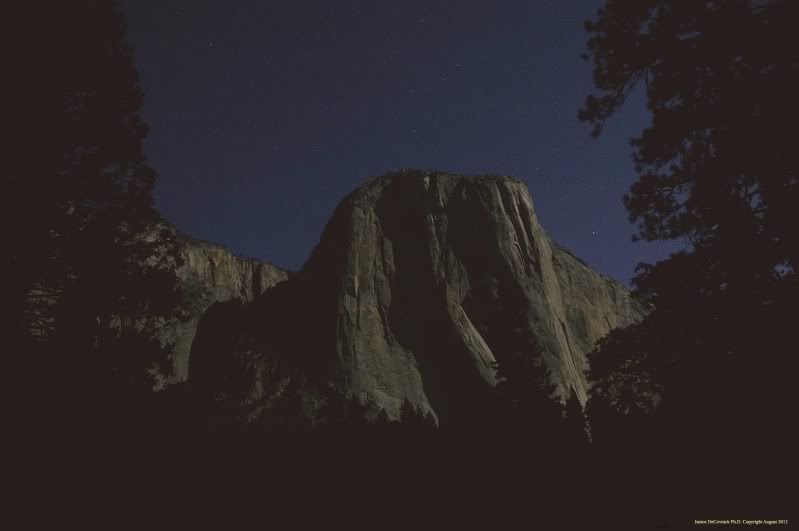
August 4, 2012, 1:14 a.m., Yosemite National Park. Nikon D70s, AF-S DX Zoom- Nikkor 18-70mm, Manfrotto tripod, ISO 200, f/3.5, 25 second exposure
Note Cassiopeia above El Capitain, and I'm pretty sure that is Polaris as the bright star in the upper left corner. In terms of apparent magnitude, the sun is 400,000 times as bright as reflected moonlight during a full moon.
Copyright: Janice DeCovnick Ph.D.
August 4, 2012, 1:14 a.m., Yosemite National Park. Nikon D70s, AF-S DX Zoom- Nikkor 18-70mm, Manfrotto tripod, ISO 200, f/3.5, 25 second exposure
Note Cassiopeia above El Capitain, and I'm pretty sure that is Polaris as the bright star in the upper left corner. In terms of apparent magnitude, the sun is 400,000 times as bright as reflected moonlight during a full moon.
Re: Recent Submissions: 2012 August
M16 - Eagle Nebula (IC 4703, NGC 6611), starforming Emission Nebula (The Pillars of Creation) with Open Star Cluster, in Serpens
http://www.elateobservatory.com
Copyright: Velimir Popov
Mix between SII-Ha-OIII (Hubble palette) and bicolor Ha-HaOIII-OIII
Ha channel
More information is avaliable here
Thank you for looking...
http://www.elateobservatory.com
Copyright: Velimir Popov
Mix between SII-Ha-OIII (Hubble palette) and bicolor Ha-HaOIII-OIII
Ha channel

More information is avaliable here

Thank you for looking...
Re: Recent Submissions: 2012 August
NGC 5921: Barred Spiral Galaxy in Serpens
http://billsnyderastrophotography.com/?page_id=3033
Copyright: Bill Snyder
[attachment=2]20120725_NGC5921_LRGB-PS2--V2-New-for-APOD-.jpg[/attachment]
The Sun in Ha, with AR1535 and filament
http://www.flickr.com/photos/bads_photos/7719395116/
Copyright: Bret Dahl
[attachment=1]sun_8_1_2012_submit_APOD.jpg[/attachment]
NGC 5033: Spiral Galaxy in Canes Venatici
http://skycenter.arizona.edu/gallery/galaxies/n5033
Copyright: Adam Block/Mount Lemmon SkyCenter/University of Arizona LBN468: Dark & Reflection Nebulae in Cepheus
http://astro.karvouno.org/?p=239
Copyright: Evangelos Souglakos
[attachment=0]lbn468-cepheus.jpg[/attachment]
http://billsnyderastrophotography.com/?page_id=3033
Copyright: Bill Snyder
[attachment=2]20120725_NGC5921_LRGB-PS2--V2-New-for-APOD-.jpg[/attachment]
The Sun in Ha, with AR1535 and filament
http://www.flickr.com/photos/bads_photos/7719395116/
Copyright: Bret Dahl
[attachment=1]sun_8_1_2012_submit_APOD.jpg[/attachment]
NGC 5033: Spiral Galaxy in Canes Venatici
http://skycenter.arizona.edu/gallery/galaxies/n5033
Copyright: Adam Block/Mount Lemmon SkyCenter/University of Arizona LBN468: Dark & Reflection Nebulae in Cepheus

http://astro.karvouno.org/?p=239
Copyright: Evangelos Souglakos
[attachment=0]lbn468-cepheus.jpg[/attachment]
- Attachments
-
- Click to view larger image
-
- Click to view larger image
-
- Click to view larger image
A closed mouth gathers no foot.
The Helix (Eye of God) Nebula (NGC7239)
NGC7239 - The Helix Nebula
http:www.AstroDad.com
Copyright: Max Corneau 2012 This may very well be one of the more "viewed" images I have created since the three at NASM. Strangely, the nearly finished product of this image was still on my home PC when the CBS News crew came in to interview me on Sunday for the imminent MSL EDL. So while discussing the Eyes on the Solar System Simulation and the events of EDL, I showed the crew this image which at first they could not believe was mine. After quickly disabusing the crew of their errooneous thought, we continued. I was speaking as a JPL Solar System Ambassador. Here's a URL to the video. http://dfw.cbslocal.com/video/7581151-c ... s-landing/
NGC7239 The Helix Nebula: This "Eye of God" was imaged on 25 July from Atoka, OK and 3 August, 2012.from Rockwall, TX using Astro-Tech AT-130 on SkyWatcher EQ-6 Pro at Atoka and in Rockwall Orion Sirius mount using QSI 583-WSG camera withAstro-Tech 2" field flattener with AstroDon Gen 2 I-series filters.in Atoka and AstroDon TRU Balance 5NM Ha filter in Rockwall. Ttotal image time is 5 hours consisting of 60L and 40ea. RGB at Atoka and 6x20min Ha exposures in Rockwall. Images captured, calibrated, aligned and combined in MaxIm DL with post-processing in Photoshop CS2. Copyright 2012 Max Corneau
The Helix Nebula (also known as The Eye of God, NGC 7239, or Caldwell 63) is a large planetary nebula (PN) located in the constellation Aquarius. Discovered by Karl Ludwig Harding, probably before 1824, this object is one of the closest to the Earth of all the bright planetary nebulae. The estimated distance is about 215 parsecs or 700 light-years. It resembles the Ring Nebula, whose size, age, and physical characteristics are similar to the Dumbbell Nebula, varying only in its relative proximity and the appearance from our equatorial viewing angle. The Helix has often been referred to as the Eye of God by someone on the Internet and surely when I post it to Facebook, that will become a very popular appellation.
The Helix Nebula is an example of a planetary nebula, or 'planetary' formed on axis to our view so we see it as a ring instead of a tube. The remnant central stellar core, known as a planetary nebula nucleus or PNN, is destined to become a white dwarf star. The observed glow of the central star is so energetic that it causes the previously expelled gases to brightly fluoresce and retreat in the face of stellar pressure. The Helix Nebula in the constellation of Aquarius lies about 700 light-years away, spanning about 0.8 parsec or 2.5 light-years. The Helix is rising around 11pm photographically from Rockwall and from Atoka where the trees block its view, it becomes visible near midnight. Observing this image from Atoka with my friend Tom Smith was truly a blessing. Enjoy the image. Almost forgot, because it only occupies a small field in this image and some of that is very opaque, there are countless tiny background galaxies in the image....see how many you can find.
Regards,
max
http:www.AstroDad.com
Copyright: Max Corneau 2012 This may very well be one of the more "viewed" images I have created since the three at NASM. Strangely, the nearly finished product of this image was still on my home PC when the CBS News crew came in to interview me on Sunday for the imminent MSL EDL. So while discussing the Eyes on the Solar System Simulation and the events of EDL, I showed the crew this image which at first they could not believe was mine. After quickly disabusing the crew of their errooneous thought, we continued. I was speaking as a JPL Solar System Ambassador. Here's a URL to the video. http://dfw.cbslocal.com/video/7581151-c ... s-landing/

NGC7239 The Helix Nebula: This "Eye of God" was imaged on 25 July from Atoka, OK and 3 August, 2012.from Rockwall, TX using Astro-Tech AT-130 on SkyWatcher EQ-6 Pro at Atoka and in Rockwall Orion Sirius mount using QSI 583-WSG camera withAstro-Tech 2" field flattener with AstroDon Gen 2 I-series filters.in Atoka and AstroDon TRU Balance 5NM Ha filter in Rockwall. Ttotal image time is 5 hours consisting of 60L and 40ea. RGB at Atoka and 6x20min Ha exposures in Rockwall. Images captured, calibrated, aligned and combined in MaxIm DL with post-processing in Photoshop CS2. Copyright 2012 Max Corneau
The Helix Nebula (also known as The Eye of God, NGC 7239, or Caldwell 63) is a large planetary nebula (PN) located in the constellation Aquarius. Discovered by Karl Ludwig Harding, probably before 1824, this object is one of the closest to the Earth of all the bright planetary nebulae. The estimated distance is about 215 parsecs or 700 light-years. It resembles the Ring Nebula, whose size, age, and physical characteristics are similar to the Dumbbell Nebula, varying only in its relative proximity and the appearance from our equatorial viewing angle. The Helix has often been referred to as the Eye of God by someone on the Internet and surely when I post it to Facebook, that will become a very popular appellation.
The Helix Nebula is an example of a planetary nebula, or 'planetary' formed on axis to our view so we see it as a ring instead of a tube. The remnant central stellar core, known as a planetary nebula nucleus or PNN, is destined to become a white dwarf star. The observed glow of the central star is so energetic that it causes the previously expelled gases to brightly fluoresce and retreat in the face of stellar pressure. The Helix Nebula in the constellation of Aquarius lies about 700 light-years away, spanning about 0.8 parsec or 2.5 light-years. The Helix is rising around 11pm photographically from Rockwall and from Atoka where the trees block its view, it becomes visible near midnight. Observing this image from Atoka with my friend Tom Smith was truly a blessing. Enjoy the image. Almost forgot, because it only occupies a small field in this image and some of that is very opaque, there are countless tiny background galaxies in the image....see how many you can find.
Regards,
max
-
Efrain Morales
- Science Officer
- Posts: 492
- Joined: Fri Oct 22, 2010 8:15 pm
- AKA: Jaicoa
- Location: Aguadilla, Puerto Rico
- Contact:
Mars - Curiosity Landing
Here is an image of Mars taken by me showing a typical ground base (amateur) image showing Mars Curiosity successful landing site region. (LX200ACF 12 in. OTA, CGE mount, Flea3 Ccd, TeleVue 3x barlows, Astronomik LRGB filter set.)

Re: Mars - Curiosity Landing
Efrain,Efrain Morales wrote:Here is an image of Mars taken by me showing a typical ground base (amateur) image showing Mars Curiosity successful landing site region. (LX200ACF 12 in. OTA, CGE mount, Flea3 Ccd, TeleVue 3x barlows, Astronomik LRGB filter set.)
many times at public outreach events I am asked why people cannot see the moonlanding sites, or the flags or the rovers we left behind when looking through my 16-inch Dob. The nominal response is that the moon is a quarter million miles away and we would need a stadium sized telescope, not degraded by Earth's atmosphere to see things of that scale on Luna. Obviously a single rover on Mars would be orders of magnitude more challenging to directly image. Your martian image taken with an SCT is really great. Do you suppose you could be more clear about how impossibly difficult it would be to directly image the MSL from Earth because the way it's depicted on your image could be seen as mighty confusing? For example, maybe do a little math and determine how many miles wide your little red dot would be if it were to scale. Otherwise, it's kind of a disservice to the public's understanding of this great event. They see your big telescope and have no concept of scale. for example, I'll bet that the little red dot on your image that distinguishes Gale Crater is at least several hundred miles across.
Re: Recent Submissions: 2012 August
The Milky Way seen from the volcano road / Reunion Island.
http://www.lucperrot.fr/
http://www.facebook.com/lucperrotphoto
Copyright: Luc Perrot Annotated version : http://www.lucperrot.fr/sa/volcano_road_annot.jpg
http://www.lucperrot.fr/
http://www.facebook.com/lucperrotphoto
Copyright: Luc Perrot Annotated version : http://www.lucperrot.fr/sa/volcano_road_annot.jpg

-
kwon o chul
- Ensign
- Posts: 34
- Joined: Sun Nov 07, 2010 11:13 am
Baobab tree and milky way
2012. July. Kimberley, Western Australia.
There are so many baobab (boab) trees there.
You can see Summer Triangle is upside down.
Kwon O Chul


There are so many baobab (boab) trees there.
You can see Summer Triangle is upside down.
Kwon O Chul
Re: Recent Submissions: 2012 August
Signals from distant Mars
In this picture of the antenna DSS-63 with a diameter of 70m (20 floor building) is pointing the Curiosity rover 8 hours before landing on the surface of Mars (Also pictured). This antenna is located in Madrid and it is part of the Deep Space Network (DSN) property of NASA JPL. At the moment of the picture, the antenna was busy doing Ranging and Doppler measurements of the signals travelling from spacecraft in order to calculate its position. At the end of this session the calculated position is radioed back to the Curiosity so it can make its EDL using only its IMU and radar
Higher resolution: http://www.bultza.com/blogspot/2012/mar ... 2_full.jpg
Higher resolution: http://www.bultza.com/blogspot/2012/mar ... 1_full.jpg
Copyright: Aitor Conde Rodriguez. - http://vueltaabruselas.blogspot.com
Taken with a Canon 550D
Enjoy!!!
In this picture of the antenna DSS-63 with a diameter of 70m (20 floor building) is pointing the Curiosity rover 8 hours before landing on the surface of Mars (Also pictured). This antenna is located in Madrid and it is part of the Deep Space Network (DSN) property of NASA JPL. At the moment of the picture, the antenna was busy doing Ranging and Doppler measurements of the signals travelling from spacecraft in order to calculate its position. At the end of this session the calculated position is radioed back to the Curiosity so it can make its EDL using only its IMU and radar
Higher resolution: http://www.bultza.com/blogspot/2012/mar ... 2_full.jpg

Higher resolution: http://www.bultza.com/blogspot/2012/mar ... 1_full.jpg

Copyright: Aitor Conde Rodriguez. - http://vueltaabruselas.blogspot.com
Taken with a Canon 550D
Enjoy!!!
Last edited by bulltza on Wed Aug 08, 2012 3:12 pm, edited 1 time in total.
-
Efrain Morales
- Science Officer
- Posts: 492
- Joined: Fri Oct 22, 2010 8:15 pm
- AKA: Jaicoa
- Location: Aguadilla, Puerto Rico
- Contact:
M7 - "Ptolemy's Cluster"
M7 ( "Ptolemy's Cluster" ) Is a Beautiful open cluster of young bright stars in the constellation of Scorpius at the south/east (L) of the tail., The cluster is seen projected on a background of gold dust of numerous faint and distant Milky Way stars.
Equipment: WO ED80II, P/B LX200ACF 12 in. OTA, CGE mount, ST2000xm, AO8, CFW9, Astronomik filter set. (Ha2.5hr,GB40min ea.)
Equipment: WO ED80II, P/B LX200ACF 12 in. OTA, CGE mount, ST2000xm, AO8, CFW9, Astronomik filter set. (Ha2.5hr,GB40min ea.)

-
Pere Soler
- Asternaut
- Posts: 2
- Joined: Wed Aug 08, 2012 12:50 pm
- Location: Spain
- Contact:
Re: Recent Submissions: 2012 August
Draconids meteor shower
8/10/2011 at 20:05 pm from Catalonia (Spain)
http://www.peresoler.net
Copyright: Pere Soler
Hope you enjoy it!!
8/10/2011 at 20:05 pm from Catalonia (Spain)
http://www.peresoler.net
Copyright: Pere Soler
Hope you enjoy it!!

M20 and M8 narrow band
Hi it's Is a classic summer astrophotography.
Copyright: Rafael Rodriguez Morales
http://Www.skyandphoto.com
Big photo and data
http://skyandphoto.smugmug.com/Other/My ... &lb=1&s=X3
Copyright: Rafael Rodriguez Morales
http://Www.skyandphoto.com
Big photo and data
http://skyandphoto.smugmug.com/Other/My ... &lb=1&s=X3

-
jstrong611
- Asternaut
- Posts: 6
- Joined: Wed Aug 08, 2012 7:40 pm
Re: Recent Submissions: 2012 August
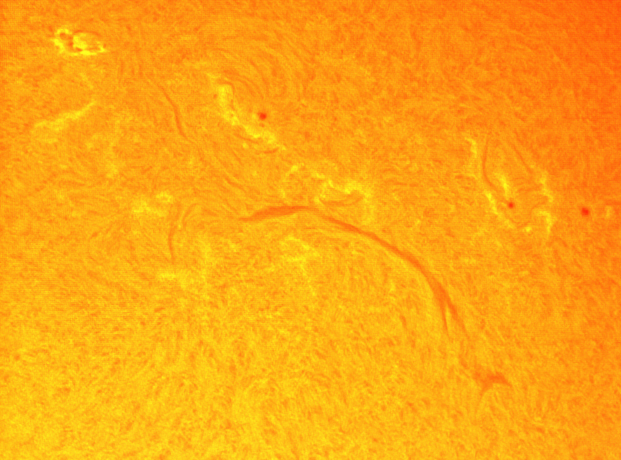
I normally think of the sun as happy... Why does (s)he look so unhappy today???
Taken by: John Strong
Date: 08-08-2012
Telescope: Coronado SolarMax II 60
Imager: Imaging Source DBK 21AU618.AS w/ 2x barlows
Processing: Stacking of ~200 frames using RegiStax 6
Taken by: John Strong
Date: 08-08-2012
Telescope: Coronado SolarMax II 60
Imager: Imaging Source DBK 21AU618.AS w/ 2x barlows
Processing: Stacking of ~200 frames using RegiStax 6
-
mexhunter

- Science Officer
- Posts: 467
- Joined: Tue Apr 27, 2010 1:41 pm
- AKA: César Cantú
- Location: Monterrey, Mexico.
- Contact:
Re: Recent Submissions: 2012 August
Sun
Copyright:
César Cantú
The Sun is shagadelic, baby!
Discover Blogs | Bad Astronomy | 2012 Aug 09
Incredible View of an Active Region on the Sun
Universe Today | Nancy Atkinson | 2012 Aug 09
Copyright:
César Cantú
The Sun is shagadelic, baby!

Discover Blogs | Bad Astronomy | 2012 Aug 09
The wonderful astrophotographer César Cantú takes amazing pictures of the sky, and his shots of the Sun are truly cool. On Wednesday, August 8, 2012, he took this image of the Sun and a sunspot called Active Region 1524:
The Sun is a 1970s orange shag carpet!
Actually, César used an Hα filter, which blocks almost all the light from the Sun except for a very narrow slice of color where hydrogen emits light, and in fact this is preferentially given off by hydrogen under the sway of magnetic fields on the Sun, so this image accentuates magnetic activity. You can see lots of structure like the sunspots and the plasma flowing along magnetic fields – especially along the Sun’s edge, where they’re called prominences.
The Sun looks amazingly different depending on how you look at it. Far from being a featureless white disk, it actually has detail all the way down to the resolution of our best telescopes. The surface of the Sun is fiendishly complex, and the amount to understand is equally daunting. And, as usual with astronomy, with this complexity comes astonishing beauty.
Image credit: César Cantú, used with permission.
Incredible View of an Active Region on the Sun
Universe Today | Nancy Atkinson | 2012 Aug 09
Last edited by bystander on Thu Aug 09, 2012 3:53 pm, edited 2 times in total.
Reason: Added article from Bad Astronomy (and Universe Today). Congratulations!
Reason: Added article from Bad Astronomy (and Universe Today). Congratulations!
I come to learn and to have fun.
Re: Recent Submissions: 2012 August
Ptolemy's Cluster - Messier 7
http://www.pbase.com/rolfolsen/astro_photography
Copyright: Rolf Wahl Olsen Large image: http://www.pbase.com/rolfolsen/image/145284502/original
This image shows Ptolemy's Cluster, the famous bright open star cluster easily visible with the naked eye near the tail of Scorpius. It lies at a distance of 980 light years and has some 80 member stars within its diameter of about 25 light years. The age of these young bright stars is approximately 200 million years.
The cluster was known as a hazy patch in the sky already in antiquity and was first described by the ancient astronomer Ptolemy in 130 AD.
Image details:
Date: 31st May 2012
Exposure: LRGB: 48:24:24:24m, total 2hrs @ -28C
Telescope: 10" Serrurier Truss Newtonian f/5
Camera: QSI 683wsg with Lodestar guider
Filters: Astrodon LRGB E-Series Gen 2
Taken from my observatory in Auckland, New Zealand
http://www.pbase.com/rolfolsen/astro_photography
Copyright: Rolf Wahl Olsen Large image: http://www.pbase.com/rolfolsen/image/145284502/original

This image shows Ptolemy's Cluster, the famous bright open star cluster easily visible with the naked eye near the tail of Scorpius. It lies at a distance of 980 light years and has some 80 member stars within its diameter of about 25 light years. The age of these young bright stars is approximately 200 million years.
The cluster was known as a hazy patch in the sky already in antiquity and was first described by the ancient astronomer Ptolemy in 130 AD.
Image details:
Date: 31st May 2012
Exposure: LRGB: 48:24:24:24m, total 2hrs @ -28C
Telescope: 10" Serrurier Truss Newtonian f/5
Camera: QSI 683wsg with Lodestar guider
Filters: Astrodon LRGB E-Series Gen 2
Taken from my observatory in Auckland, New Zealand
-
Efrain Morales
- Science Officer
- Posts: 492
- Joined: Fri Oct 22, 2010 8:15 pm
- AKA: Jaicoa
- Location: Aguadilla, Puerto Rico
- Contact:
Re: Mars - Curiosity Landing
Hi Max!, Thanks! This image was made days before the actual sucessful landing of Curiosity and quite impossible to do a accurate location of the landing!, The key words on my text is "REGION" or else i would be working with the MSL teamastrodad wrote:Efrain,Efrain Morales wrote:Here is an image of Mars taken by me showing a typical ground base (amateur) image showing Mars Curiosity successful landing site region. (LX200ACF 12 in. OTA, CGE mount, Flea3 Ccd, TeleVue 3x barlows, Astronomik LRGB filter set.)
many times at public outreach events I am asked why people cannot see the moonlanding sites, or the flags or the rovers we left behind when looking through my 16-inch Dob. The nominal response is that the moon is a quarter million miles away and we would need a stadium sized telescope, not degraded by Earth's atmosphere to see things of that scale on Luna. Obviously a single rover on Mars would be orders of magnitude more challenging to directly image. Your martian image taken with an SCT is really great. Do you suppose you could be more clear about how impossibly difficult it would be to directly image the MSL from Earth because the way it's depicted on your image could be seen as mighty confusing? For example, maybe do a little math and determine how many miles wide your little red dot would be if it were to scale. Otherwise, it's kind of a disservice to the public's understanding of this great event. They see your big telescope and have no concept of scale. for example, I'll bet that the little red dot on your image that distinguishes Gale Crater is at least several hundred miles across.
 ) and Disservice to the public at the contrary I just saw an image of Pic du Midi Observatory in France with a comparison image of the MGS doing exactly the same method I used with no image scale either. So this image is ONLY a general idea of its location, Clear Skies!
Efrain Morales USN Ret.
-
Lorenzo Comolli
- Ensign
- Posts: 82
- Joined: Sat Mar 05, 2011 9:18 pm
- Location: Italy
- Contact:
Re: Recent Submissions: 2012 August
NGC 7380 in Cepheus
Copyright: Lorenzo Comolli
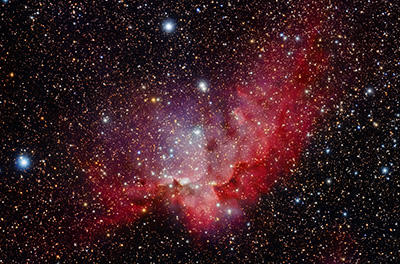
Details and tech data: http://www.astrosurf.com/comolli/d120.htm
The Magellanic Clouds
Copyright: Processing: Lorenzo Comolli, Imaging: L. Comolli, L. Fontana, G. Ghioldi, E. Sordini
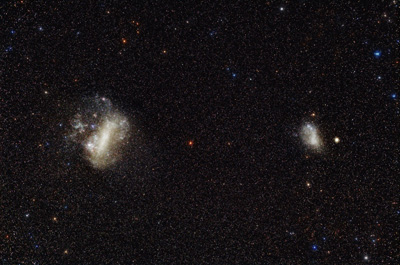
Details and tech data: http://www.astrosurf.com/comolli/d118.htm
Copyright: Lorenzo Comolli

Details and tech data: http://www.astrosurf.com/comolli/d120.htm
The Magellanic Clouds
Copyright: Processing: Lorenzo Comolli, Imaging: L. Comolli, L. Fontana, G. Ghioldi, E. Sordini

Details and tech data: http://www.astrosurf.com/comolli/d118.htm
-
rstevenson

- Quis custodiet ipsos custodes?
- Posts: 2705
- Joined: Fri Mar 28, 2008 1:24 pm
- Location: Halifax, NS, Canada
Re: Recent Submissions: 2012 August
That's a gorgeous image of the Magellanic Clouds Lorenzo (and friends.) I hope to get far enough south to see them by eye some day. (I might take in a footy game while I'm down there.)
Thanks for sharing.
Rob
Thanks for sharing.
Rob
Re: Recent Submissions: 2012 August
Conjunction Spica, Saturn and Mars above the city of Saint-Paul / Reunion Island
http://www.lucperrot.fr/
http://www.facebook.com/lucperrotphoto
Copyright: Luc Perrot
http://www.lucperrot.fr/
http://www.facebook.com/lucperrotphoto
Copyright: Luc Perrot

Recent Submissions: 2012 May



hola a todos
protuberancias del dia 15-7-2012
los medios son
telescopio: PST
cámara: DMK31AU03.AS
y la lente de barlow que tiene el ocular de 13 mm. del HYPERION
son 400 frames por toma
procesado con registax 3
saludos jose
hi allprotuberancias del dia 15-7-2012
los medios son
telescopio: PST
cámara: DMK31AU03.AS
y la lente de barlow que tiene el ocular de 13 mm. del HYPERION
son 400 frames por toma
procesado con registax 3
saludos jose
protrusions of the day 07/15/2012
means are
telescope: PST
camera: DMK31AU03.AS
and Barlow lens that has the eye of 13 mm. the HYPERION
are 400 frames per serving
RegiStax processed 3
Greetings jose